
Traditional vs E-Sourcing: Modern Procurement Methods

Many businesses are moving from traditional sourcing to electronic sourcing (eSourcing) for better supply chain and purchasing management. Let’s examine how these two procurement methods differ and why eSourcing has become increasingly important in modern business operations.
Key Takeaways
| Focus Area | Takeaway |
|---|---|
| Speed | eSourcing processes run roughly 40% faster than traditional, paper-based sourcing |
| Cost | Digital sourcing typically delivers 15-18% cost reduction over manual methods |
| Visibility | Centralised, real-time status tracking replaces fragmented paper trails |
| Supplier Relations | Data-based collaboration expands and strengthens supplier relationships |
| Technology | AI, predictive analytics and IoT are extending eSourcing’s advantage over traditional methods |
Quick Overview
| Aspect | Traditional Sourcing | eSourcing |
|---|---|---|
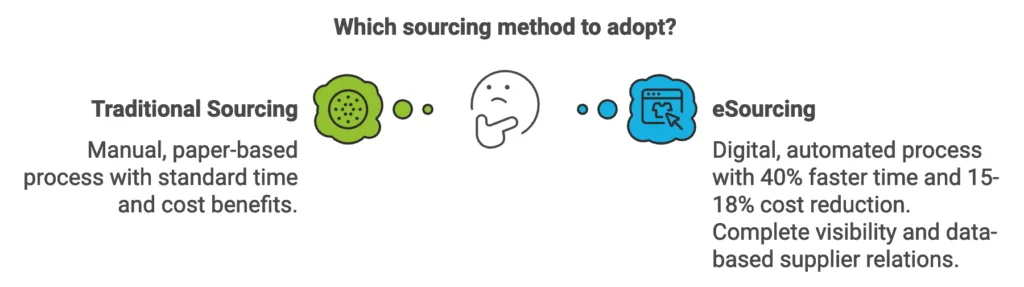
| Process | Manual, paper-based | Digital, automated |
| Time | Standard processing | 40% faster |
| Cost Benefits | Standard | 15-18% reduction |
| Process Visibility | Basic | Complete, instant updates |
| Supplier Relations | In-person focus | Data-based, expandable |
Traditional Sourcing Explained
Understanding RFP processes is essential to grasping traditional sourcing methods. This conventional approach centers on personal connections and verbal agreements, supported by regular phone conversations and in-person meetings. While effective for years, this method requires substantial manual effort and staff resources, often resulting in limited process visibility and potential data entry errors.
Understanding eSourcing
Modern eSourcing solutions utilize digital platforms to streamline purchasing. These systems automate processes to reduce errors while providing instant data access for informed decisions. The result is a more transparent procurement process with improved compliance standards.
Strategic sourcing practices have evolved significantly with the introduction of eSourcing platforms.
Where eSourcing Pulls Ahead
Speed and visibility: Automated request creation and real-time status tracking replace the phone-tag and paper trails of traditional sourcing. Effective supplier management and procurement analytics turn manual, fragmented records into centralised, auditable data.
Cost and supplier relationships: Reverse auction strategies extend your supplier network and sharpen negotiations in a way cold calls can’t. Standardized supplier feedback loops and portals replace the personal-contact-only model of traditional sourcing with measurable, repeatable collaboration.
Making the switch: Moving to eSourcing means adopting cloud-based supplier management tools and stronger cross-functional collaboration — the same digital foundation sustainable sourcing programs now rely on for ESG data and traceability.
Summary
The shift toward eSourcing marks significant progress in procurement methods. While traditional approaches have proven reliable, current business needs require faster, more transparent, data-focused solutions. Streamlined procurement processes demonstrate that eSourcing provides clear benefits in efficiency, transparency, and strategic value.
Success in modern procurement requires careful planning and organizational support. Contract management solutions help businesses thrive by combining traditional relationship-based approaches with efficient digital tools. As technology continues to advance, eSourcing helps transform procurement into a strategic business advantage.