


You’ve done a lot of work for this sourcing cycle. You’ve created a solid RFQ, invited multiple suppliers, and you’re waiting for the competitive bids to roll in. But something feels wrong. The prices aren’t as low as they should be. The competition seems strangely… calm.
There could be many reasons for this—maybe the market has genuinely changed, or your specifications are challenging. But there’s another possibility you should consider: suppliers might be working together instead of competing. If that’s happening, you need to understand what’s going on and take real steps to address it.
When Suppliers Stop Competing and Start Cooperating
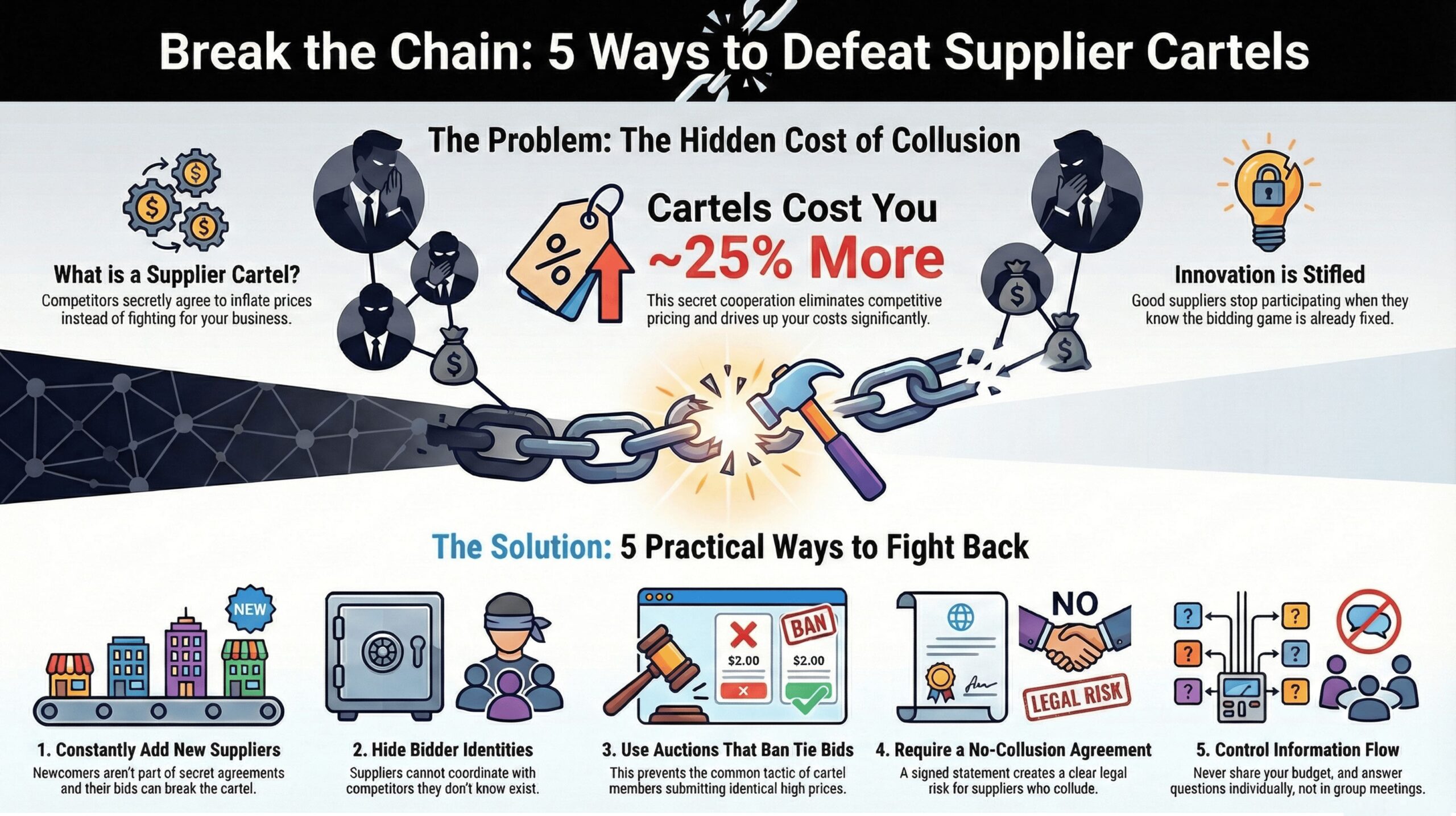
Here’s what happens when suppliers form cartels: those who should be fighting for your business have secretly agreed to keep prices high or take turns winning contracts. Think of it as a secret deal—except this deal is costing you about 25% more than you should be paying.
The damage is bigger than just money. When cartels control the market, good suppliers with new ideas and better prices stop participating. Why compete when the game is already fixed? Soon, you’re left with only a few players who are working together, and your procurement process means nothing.
Five Simple Ways to Break the Cartel
The good news? You can fight back. Here are five practical strategies to break these secret agreements:
1Keep Adding New Suppliers
Cartels work because the same suppliers know each other well. They know who will bid, what prices to expect, and how to coordinate. Your best weapon? New suppliers.
Make it a regular habit to find new vendors—especially smaller companies with fresh ideas or suppliers from different cities or countries. These new players haven’t joined any secret agreements. Their real competitive pricing can break even the strongest cartels. When old suppliers see newcomers offering much better deals, their secret agreements fall apart.
2Hide Supplier Names During Bidding
Think about it: if suppliers can see who else is bidding, they can easily coordinate with each other. Whether you’re running a manual RFQ, conducting negotiations, or using any bidding process, always keep bidder identities hidden.
When suppliers don’t know who their competitors are, they can’t work together. They can’t check if others are following the cartel rules. They can’t punish someone who offers a truly competitive price. Keep them guessing about the competition. This uncertainty forces everyone to compete fairly because coordination becomes impossible.
3Use Reverse Auctions That Don’t Allow Tie Bids
Here’s a common cartel tactic: suppliers agree to submit the exact same price. When all bids are identical, you as the buyer are stuck—you can’t clearly award the business to anyone based on price alone. This is exactly what cartels want.
A reverse auction platform can prevent this by not allowing tie bids. The system forces suppliers to submit different prices, which means they must actually compete with each other. Even a difference of one rupee or one dollar breaks the cartel’s strategy. When suppliers know they cannot hide behind identical pricing, they’re pushed to offer their truly competitive rates. This single feature can dismantle a cartel’s most basic coordination tactic.
4Make Suppliers Sign a No-Collusion Agreement
Sometimes, the best way to stop bad behavior is to make the rules very clear. Ask every bidder to sign a simple statement: “I have not discussed pricing or coordination with other bidders.”
This is not just a formality. It’s a legal document that lets you disqualify or take action against suppliers if you find out they coordinated. More importantly, it sends a clear message: you’re paying attention, and there will be consequences. Honest suppliers don’t mind signing this. For cartel members, it becomes a real risk.
5Control What Information You Share
Cartels need information to work together. Don’t give them that information.
Never share your budget or target price in your RFQ documents—this just tells cartels exactly what price to coordinate around. When suppliers have questions, answer them through email or online platforms, not in face-to-face meetings where people from different companies can quietly talk to each other. These small changes can stop the casual conversations where coordination usually starts.
Moving Forward
Breaking cartels is not about distrusting everyone. It’s about creating a system where honest competition wins and coordination becomes difficult and risky.
The suppliers who truly want your business—those with good ideas, better efficiency, and real value—will appreciate these steps. They’re tired of losing to suppliers who cheat the system.
Try one or two of these strategies in your next procurement cycle. Watch how the bidding changes. You might be surprised how quickly a little unpredictability can turn fake competition into real competition.
Your procurement process should help you, not hurt you. It’s time to take control.